Wild Yam
Wild Yam is edible and medicinal, though said to be bland, when cooked with seasoning it is tasty. Used for centuries as a medicinal herb by the Aztec and Myan peoples for a wide range of ailments including many female problems and to relieve the pain of child birth. Research indicates that this is a powerful alternative medicine containing many steroidal saponins, mainly Dioscin which is widely used to manufacture progesterone and other steroid drugs used as contraceptives and in the treatment of various disorders of the genitary organs as well as in other diseases such as asthma and arthritis. Other constituents Phytosterols (beta-sitosterol), alkaloids and Tannins make this plant useful as an antiinflammatory, antispasmodic, cholagogue, diaphoretic and vasodilator. A decoction of the root is used to alleviate many of the symptoms of menopause and PMS such as hot flashes, night sweats, mood changes, and vaginal dryness. It is also used to treat irritable bowel syndrome, gastritis, gall bladder complaints, spasmodic cramps, painful menstruation, and in small doses is especially helpful in treating the nausea of pregnant women.
Heal-All
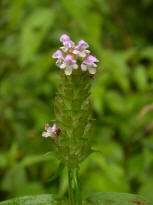
Heal-All is edible and medicinal, can be used in salads, soups, stews, or boiled as a pot herb. Used as an alternative medicine for centuries on just about every continent in the world, and for just about every ailment known to man, Heal-All is something of a panacea, it does seem to have some medicinal uses that are constant. The plants most useful constituents are Betulinic-acid, D-Camphor, Delphinidin, Hyperoside, Manganese, Oleanolic-acid, Rosmarinic-acid, Rutin, Ursolic-acid, and Tannins. The whole plant is medicinal as alterative, antibacterial, antipyretic, antiseptic, antispasmodic, astringent, carminative, diuretic, febrifuge, hypotensive, stomachic, styptic, tonic, vermifuge and vulnerary. A cold water infusion of the freshly chopped or dried and powdered leaves is a very tasty and refreshing beverage, weak infusion of the plant is an excellent medicinal eye wash for sties and pinkeye. It is taken internally as a medicinal tea in the treatment of fevers, diarrhoea, sore mouth and throat, internal bleeding, and weaknesses of the liver and heart. Clinical analysis shows it to have an antibacterial action, inhibiting the growth of pseudomonas, Bacillus typhi, E. coli, Mycobacterium tuberculi, which supports its use as an alternative medicine internally and externally as an antibiotic and for hard to heal wounds and diseases. It is showing promise in research for cancer, AIDS, diabetes, and many other maladies
Bee Balm
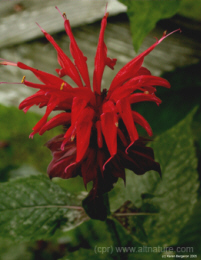
Bee Balm is edible and medicinal, the entire plant above ground is edible used as a pot herb, and it is also used as a flavoring in cooked foods. The flowers make an attractive edible garnish in salads. The plant is noted for its fragrance, and is a source of oil of thyme. The fresh or dried leaves are brewed into a refreshing aromatic and medicinal tea. An infusion of young Bee Balm leaves used to form a common beverage in many parts of the United States.
|
Bee Balm leaves and flowers and stems are used in alternative medicine as an antiseptic, carminative, diaphoretic, diuretic and stimulant. An infusion is medicinal used internally in the treatment of colds, catarrh, headaches, and gastric disorders, to reduce low fevers and soothe sore throat, to relieve flatulence, nausea, menstrual pain, and insomnia. Steam inhalation of the plant can be used for sore throats, and bronchial catarrh (inflammation of the mucus membrane, causing an increased flow of mucus). Externally, it is a medicinal application for skin eruptions and infections. Bergamot's distinctive aroma, found in both the leaf and flower is wonderful for use in potpourri. |
Blackberry
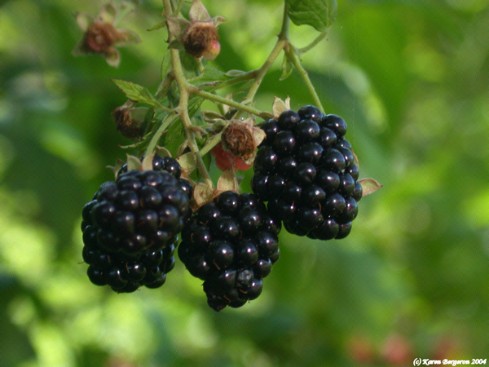
Blackberry is edible and medicinal. Used extensively by the Native American tribes, it had many other surprising uses. The leaf is more commonly used as a medicinal herb, but the root also has medicinal value. Young edible shoots are harvested in the spring, peeled and used in salads. Delicious Blackberries are edible raw or made into jelly or jam. The root-bark and the leaves are astringent, depurative, diuretic, tonic and vulnerary. They make an excellent alternative medicine for dysentery, diarrhea, hemorrhoids, and cystitis.
The most astringent part is the root. Orally, they are used to treat sore throats, mouth ulcers and gum inflammations. A decoction of the leaves is useful as a gargle in treating thrush and also makes a good general mouthwash. The presence of large amounts of tannins that give blackberry roots and leaves an astringent effect useful for treating diarrhea are also helpful for soothing sore throats. A medicinal syrup is also made from Blackberry, using the fruit and root bark in honey for a cough remedy.
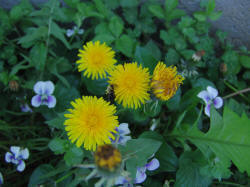
Dandelion
The fresh juice of Dandelion is applied externally to fight bacteria and help heal wounds. The plant has an antibacterial action, inhibiting the growth of Staphococcus aureus, pneumococci, meningococci, Bacillus dysenteriae, B. typhi, C. diphtheriae, proteus. The latex contained in the plant sap can be used to remove corns and warts.
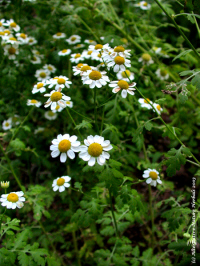
Feverfew
Feverfew is edible and medicinal. has a good reputation as alternative medicine and extensive research has proved it to be of special benefit in the treatment of certain types of migraine headaches and rheumatism or arthritis. The plant is rich in sesquiterpene lactones, the principal one being parthenolide. Parthenolide helps prevent excessive clumping of platelets and inhibits the release of certain chemicals, including serotonin and some inflammatory mediators. Constituents of Feverfew are Volatile oils, containing pinene and several pinene derivatives, bornylacetate and angelate, costic acid, b-farnesine and spiroketalenol ethers. Other constituents include essential oils, flavonoid glycosides, pinene derivatives and costic acid. Feverfew should be taken regularly to receive maximum benefit and protection from migraines. The leaves and flowering heads are antiinflammatory, antispasmodic, aperient, bitter, carminative, emmenagogue, sedative, stimulant, stomachic, vasodilator and vermifuge. An infusion made from the whole plant is used in the treatment of arthritis, colds, fevers, as a sedative and to regulate menses. Also used as a foot bath for swollen feet. Applied externally as a tincture, the plant is used in the treatment of bruises. Chewing several leaves a day has proven to be effective in preventing some migraine headaches. Feverfew’s sedative properties make it useful in hysterical complaints, nervousness, low spirits, and is a general tonic. Also said to be good as a syrup for coughs, wheezing and breathing difficulties. The dried flower buds are said to have the same properties as pyrethrum, and used as an insecticide. An essential oil from the plant is used in perfumery.
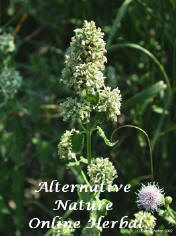
Catnip
Young leaves are edible raw. They have an aromatic mint-like flavor eaten in salads. As the name (cat-nip) suggests, cats love to nip at it, although watching them it might better be called (cat-roll) for they seem to roll, rub, and totally crush the plant into the ground. They discover that the more they crush it the more oil it releases. Plant constituents include Nepetalic acid, Alpha- & beta- Citral, Nepetalactone, Limonene, Geraniol, Dipentene, Citronella, Nerol, a terpene, Acetic acid, Butyric acid, Valeric acid and Tannin. The leaves and flowering tops are strongly antispasmodic, antitussive, astringent, carminative, diaphoretic, slightly emmenagogue, refrigerant, sedative, slightly stimulant, stomachic and tonic. Catnip has a long history of use in alternative medicine, being employed especially in treating disorders of the digestive system and, as it stimulates sweating, it is useful in reducing fevers. The fresh juice is used as an emmenagogue (to promote menstruation). Mild catnip tea is used to relieve colic in babies, restlessness and nervousness, and is very useful as a mild nervine for children. Stronger tea relieves fevers due to colds and flu as well as calming the stomach and preventing nausea and diarrhea. The fresh young shoots are good in spring salads and rubbed into meat for flavor. Applied externally or added to bath it is good for skin irritations. Catnip oil is great for aroma therapy. A strong infusion can be used to repel fleas from carpets or the fur of animals. An extract from the leaves (called nepetalactone) has herbicidal and insect repellant properties.
Yarrow
Yarrow is a very valuable medicinal herb, with much scientific evidence of use in alternative medicine as an antiseptic, antispasmodic, astringent, carminative, diaphoretic, digestive, emmenagogue, stimulant, and tonics, vasodilator and vulnerary. Yarrow is used against colds, cramps, fevers, kidney disorders, toothaches, skin irritations, and hemorrhages, and to regulate menses, stimulate the flow of bile, and purify the blood. Medicinal tea is a good remedy for severe colds and flu, for stomach ulcers, amenorrhea, abdominal cramps, abscesses, trauma and bleeding, and to reduce inflammation. The main constituents are volatile oils including linalool, camphor, sabinene, and chamazulene, sesquiterpene lctones, flavanoids, alkaloids including achilleine, polyacetylenes, triterpenes, salicylic acid, coumarins, and tannins which prove these uses in alternative medicine to be effective. Extracts of yarrow exhibit antibiotic activity and may also act as anti-neoplastic drugs. Externally for treating wounds and stopping the flow of blood. Yarrow oil has been traditionally used in hair shampoos. Some caution is advised , large or frequent doses taken over a long period may cause the skin to be more sensitive to sunlight.
